Understanding Competitive Strategy Through Focused Topics
This section introduces the key themes covered across the blog. Each article takes a different angle on competitive strategy, from mathematical thinking to tournament design and community dynamics. Together, they form a layered view of how these games function beyond the surface level.
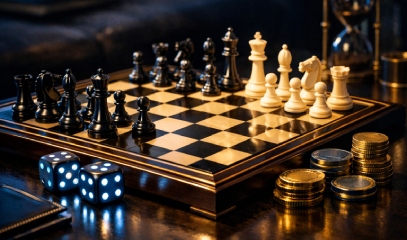
Probability and Resource Management in Practice
Strategy games often reward players who can balance risk and control outcomes over time. The article on correctly using loaded dice examines this idea through the lens of probability and resource management. It looks at how players assess uncertain outcomes, allocate limited resources, and make decisions that improve their position across multiple turns rather than relying on short-term gains.

How Championship-Level Tournaments Are Structured
Competitive play introduces a different layer of complexity, where performance is measured across structured formats. The Teamfight Tactics championship preview explores how high-level tournaments are organized, including qualification systems, match formats, and scoring models. These structures are designed to balance fairness with competitive intensity, ensuring that consistent performance is rewarded over time.
Diversity and Representation in Competitive Gaming
Beyond mechanics and formats, competitive strategy gaming is shaped by the people who participate in it. The Women in Leadership TFT Series preview focuses on representation within competitive environments and highlights efforts to create more inclusive spaces. It examines how visibility, access, and community support can influence who participates and who succeeds.
How These Topics Connect
While each article focuses on a specific area, they all contribute to a broader understanding of competitive strategy gaming. Probability and resource management shape how decisions are made in-game. Tournament structures determine how those decisions are evaluated over time. Community dynamics influence who participates and how the competitive environment develops.
By bringing these perspectives together, the blog provides a more complete view of the ecosystem. Readers can move between articles to see how individual elements connect, building a deeper understanding of both gameplay and the systems that surround it.
A Structured Look at Competitive Strategy Gaming
At some point, this blog delineates competitive strategy games before their major and aligned issues change its perspectives. Every piece thus fits into a puzzle, thereby helping readers define a mid-depth picture. And as long as the reader discusses gameplay, plays, corners, develops itself, logically aims to represent the truest of the truest of balance and perspectives.
I think it's kind of depressing that the very top selling Real Time Strategy games of all time are still Age of Empires 2 (1999) and StarCraft (1998).
— Sandy Petersen 🪔 (@SandyofCthulhu) December 1, 2025
Has there been no huge improvements in real time strategy in 26 years? pic.twitter.com/lllV9zcBSU